
On Friday 10 May 2024, at the Embassy of the United States of America in Rabat, the official launch of the JTIP project on “the protection and reintegration of victims of trafficking in human beings” was announced, in partnership between the National Commission for the Coordination of Measures to Combat and Prevent Trafficking in Human Beings (CNCLT), the International Organization for Migration (IOM), the United Nations Office on Drugs and Crime (UNODC) and the International Labour Organization (ILO), with financial support from the US Department of State – Office to Monitor and Combat Trafficking in Persons (OTIP).
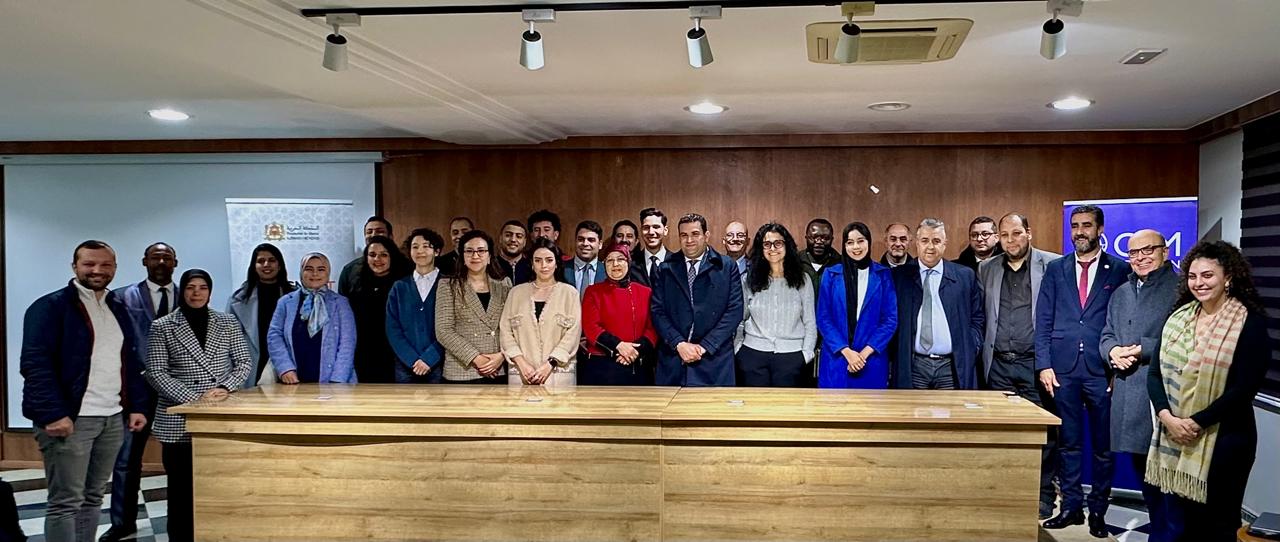
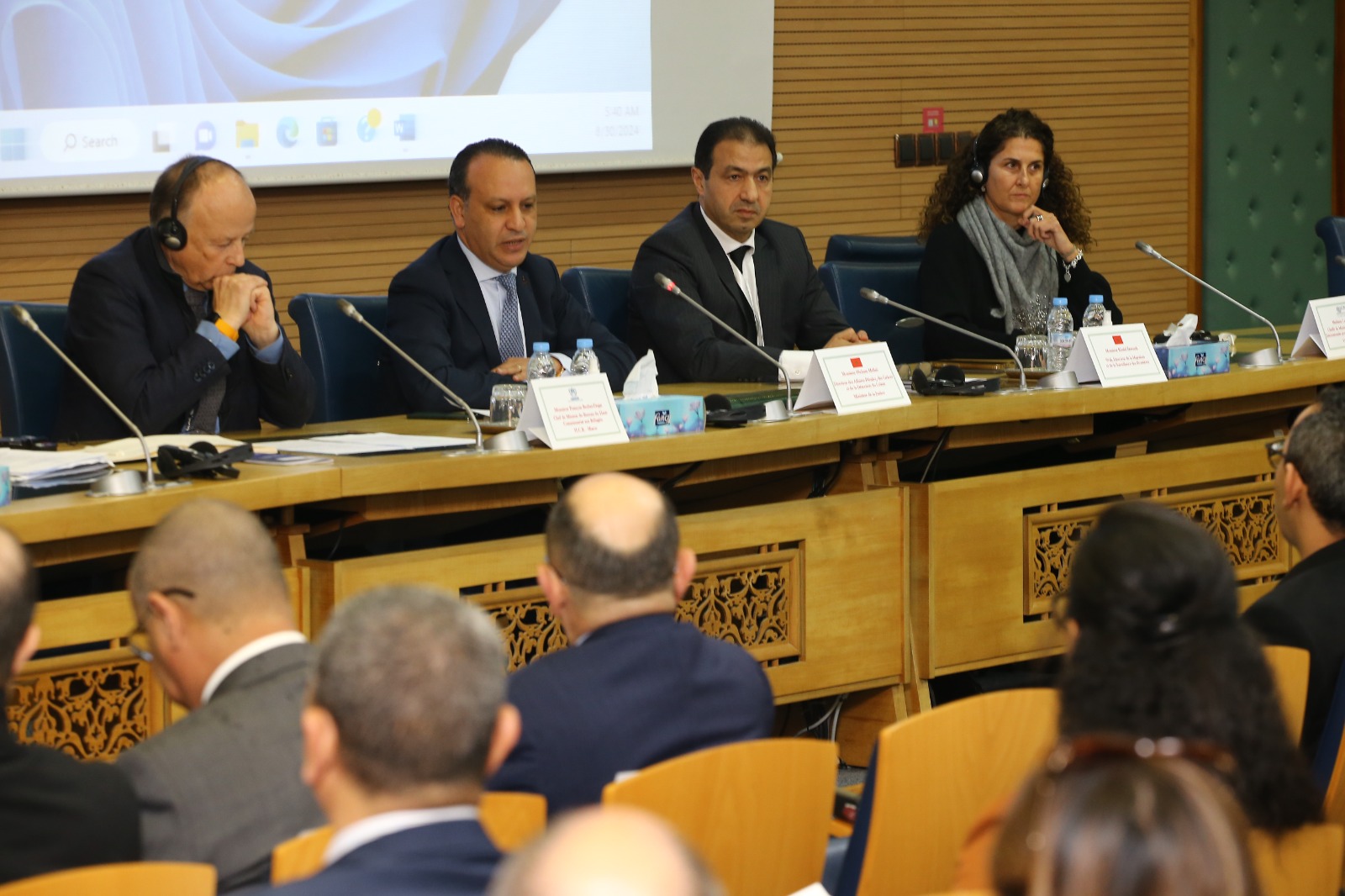
This took place at a ceremony chaired by Mr Puneet Talwar, Ambassador of the United States of America to the Kingdom of Morocco, Mr Hicham Mellati, Director of Criminal Affairs, Pardons and Crime Monitoring, in his capacity as supervising President of the National Commission for the Coordination of Measures to Combat and Prevent Trafficking in Human Beings, and Ms Nathalie Fustier, United Nations Resident Coordinator in Morocco. The ceremony was attended by the members of the National Commission responsible for the coordination of measures to combat and prevent trafficking in human beings and by a group of institutional actors involved in combating trafficking in human beings, as well as representatives of international organisations and civil society actors.
This programme forms part of the efforts overseen by the National Commission for the Coordination of Measures to Combat and Prevent Trafficking in Human Beings in the field of applying procedures and measures for the protection of and assistance to victims of trafficking in human beings, in the context of the implementation and activation of the National Plan to Combat and Prevent Trafficking in Human Beings 2023-2030 and of the Strategic Implementation Plan 2026-2023 in the field of victim protection and care, particularly with regard to the activation of the National Referral Mechanism for the care of victims of trafficking in human beings.
This programme will make it possible to provide direct assistance services and temporary and emergency shelters for victims of trafficking in human beings, as well as their socio-professional reintegration, through partnership agreements with civil society actors, together with voluntary return and reintegration programmes, while placing greater emphasis on legal and judicial assistance for victims. During the implementation phases of the programme, emphasis will be placed on capacity-building activities as well as on socio-economic integration through the recognition of acquired experience, skills enhancement and the development of social projects.
In a speech delivered on this occasion, Mr Hicham Mellati explained that the programme aims to promote the protection and socio-economic integration of victims of trafficking in human beings into society through an effective, victim-centred national system, in order to enable them to recover from the trauma of trafficking.
The programme aims to establish appropriate coordination mechanisms among the various actors involved in combating trafficking in human beings in order to ensure the early detection and identification of victims and their appropriate referral so that they can be provided with legal, social, economic and health services, shelter and reintegration.
After calling on all stakeholders to step up their efforts and assume a shared responsibility in strengthening mechanisms for the protection of victims and the prevention of trafficking in human beings, Mr Mellati referred to the ongoing coordination with several government sectors to improve early monitoring, noting the positive engagement of all the sectors and institutions concerned, which are making considerable efforts to combat this phenomenon.
“We are also encouraged by the Moroccan government’s approval and wide dissemination of a comprehensive guide for the identification of victims and by the establishment of a national toll-free number for reporting potential victims of trafficking in human beings,” said Ambassador Puneet Talwar.