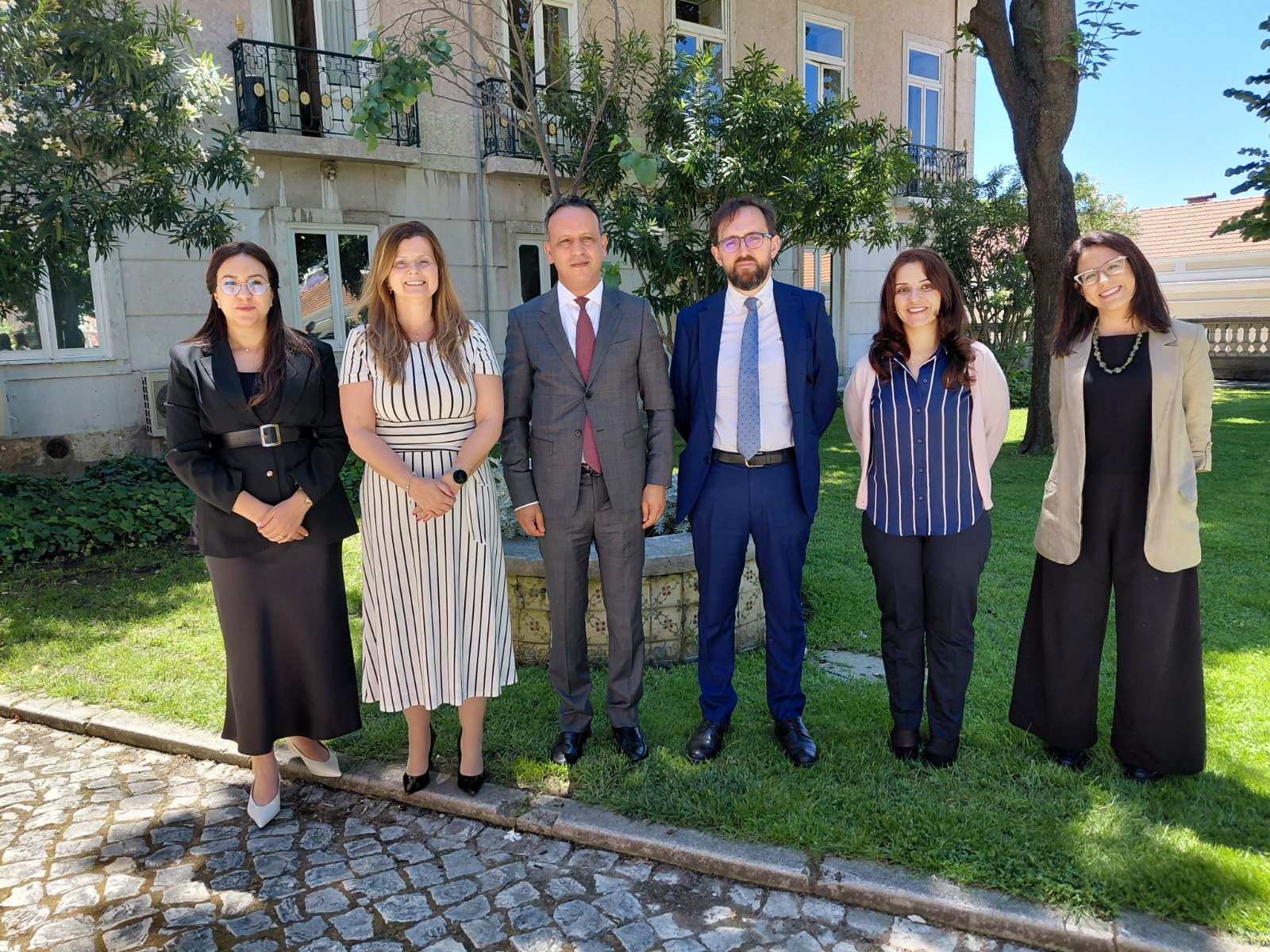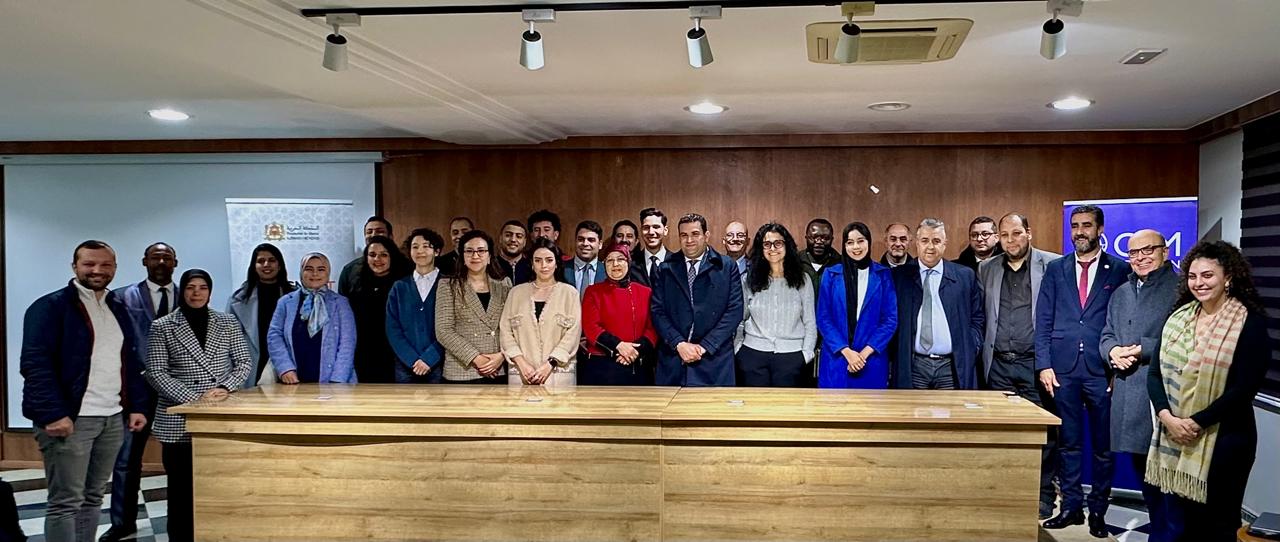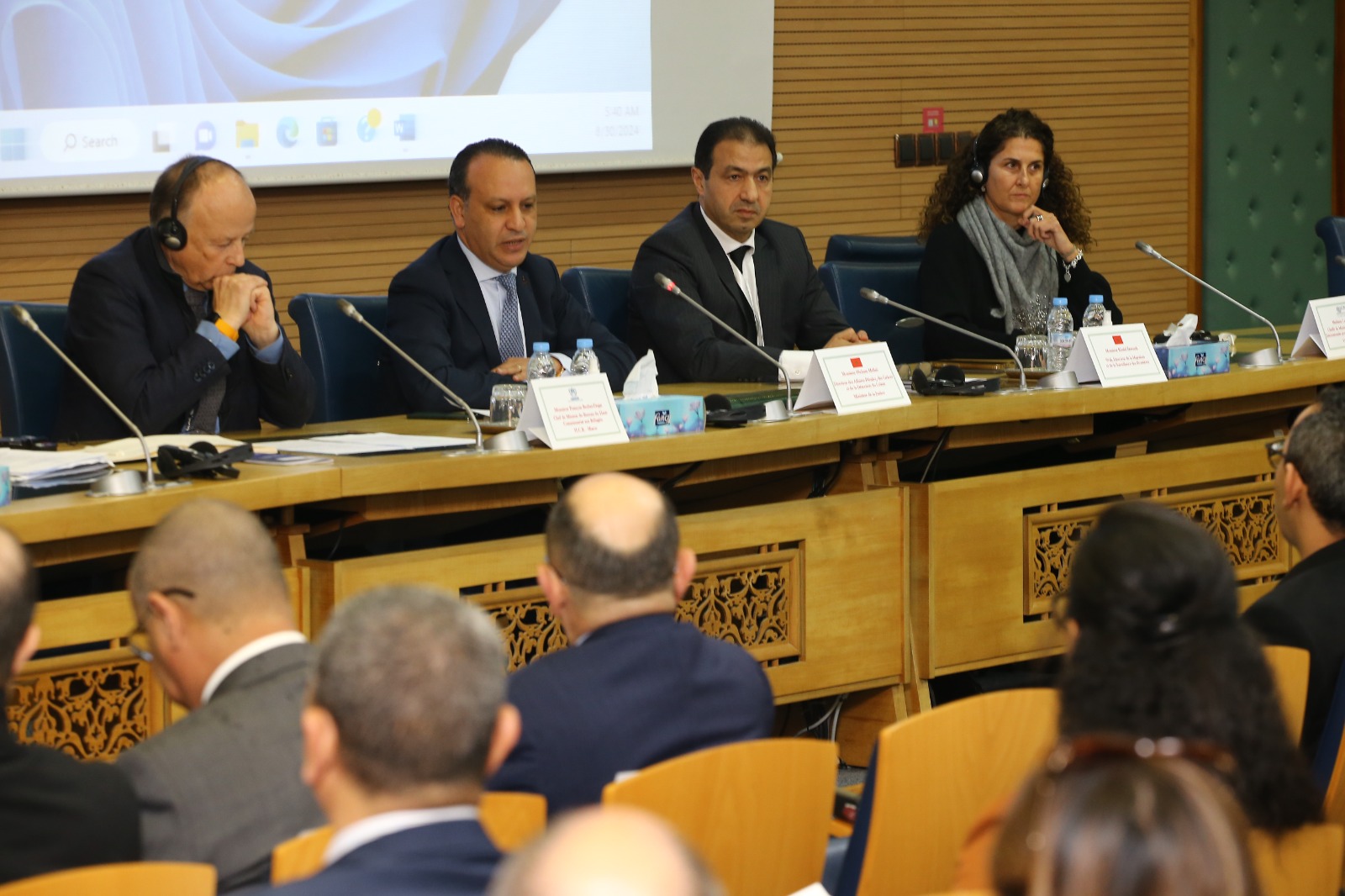

On 7 and 8 March 2024, the Tunisian capital hosted the launch ceremony of the Toolkit for the Identification of Victims of Trafficking in Human Beings in Lebanon, the first of its kind in the country, in the presence of the Minister of Justice of Lebanon and of the Coordinator of the Neighbourhood Policy with the Southern Mediterranean and Executive Director of the North-South Centre of the Council of Europe, with the participation of an official delegation of the Kingdom of Morocco composed of representatives of the National Commission for the Coordination of Measures to Combat and Prevent Trafficking in Human Beings – CNCLT, the Directorate General of National Security and the Customs and Indirect Taxes Administration.
Organised within the framework of the joint initiative of the European Union and the Council of Europe “South Programme V”, this meeting was also attended by the representative of the Ministry of Justice of Tunisia, as well as the delegations of Malta and Portugal.
The toolkit launched comprises reference documents serving as a working tool to help unify the vision of all stakeholders with regard to the detection of trafficking in human beings. It aims to enable professionals from governmental and non-governmental agencies and institutions, as well as civil society actors, to monitor offences related to trafficking in human beings and to identify potential victims, helping to initiate the process of recognising them as victims and providing them with the assistance and protection required under the relevant international and national legal instruments.
Accordingly, and in the context of sharing experiences and good practices, the countries represented were able to learn about the progress made by the Kingdom of Morocco since the adoption in March 2023 of the National Plan to Combat Trafficking in Human Beings 2023-2030 and of the National Referral Mechanism for victims (NRM), in particular with regard to the territorial implementation of the NRM and the pilot initiatives launched by Morocco during the first year of implementation of its Strategic Action Plan 2023-2026.
It should be noted that Morocco is the second country in the region to have established an NRM and, together with Tunisia, stands as a pioneering experience in the region in combating trafficking in human beings.
Furthermore, during this meeting, alongside the launch of the Toolkit, a HELP course on Combating Trafficking in Human Beings, targeting professionals responsible for identification, was also published. Another course on Combating Violence against Women will be launched on the same day and will address the intersections between gender-based violence and trafficking in human beings. On the sidelines of the launch, technical workshops will be held on data protection and on units for the detection and identification of victims at borders, with a view to exploring opportunities for regional and sub-regional cooperation in the detection and identification of victims.
The second day featured the proceedings of two technical workshops, focusing respectively on the detection and identification of victims and data protection, drawing on the experience of Lebanon, and on border detection offices, with a case study from Portugal.